

Raccoon Removal in Burlington & Oakville
Regional Wildlife Services
Let Regional Wildlife Services be the solution to your raccoon problem.
Raccoon Removal — A Raccoon in Your Attic, Removed Humanely
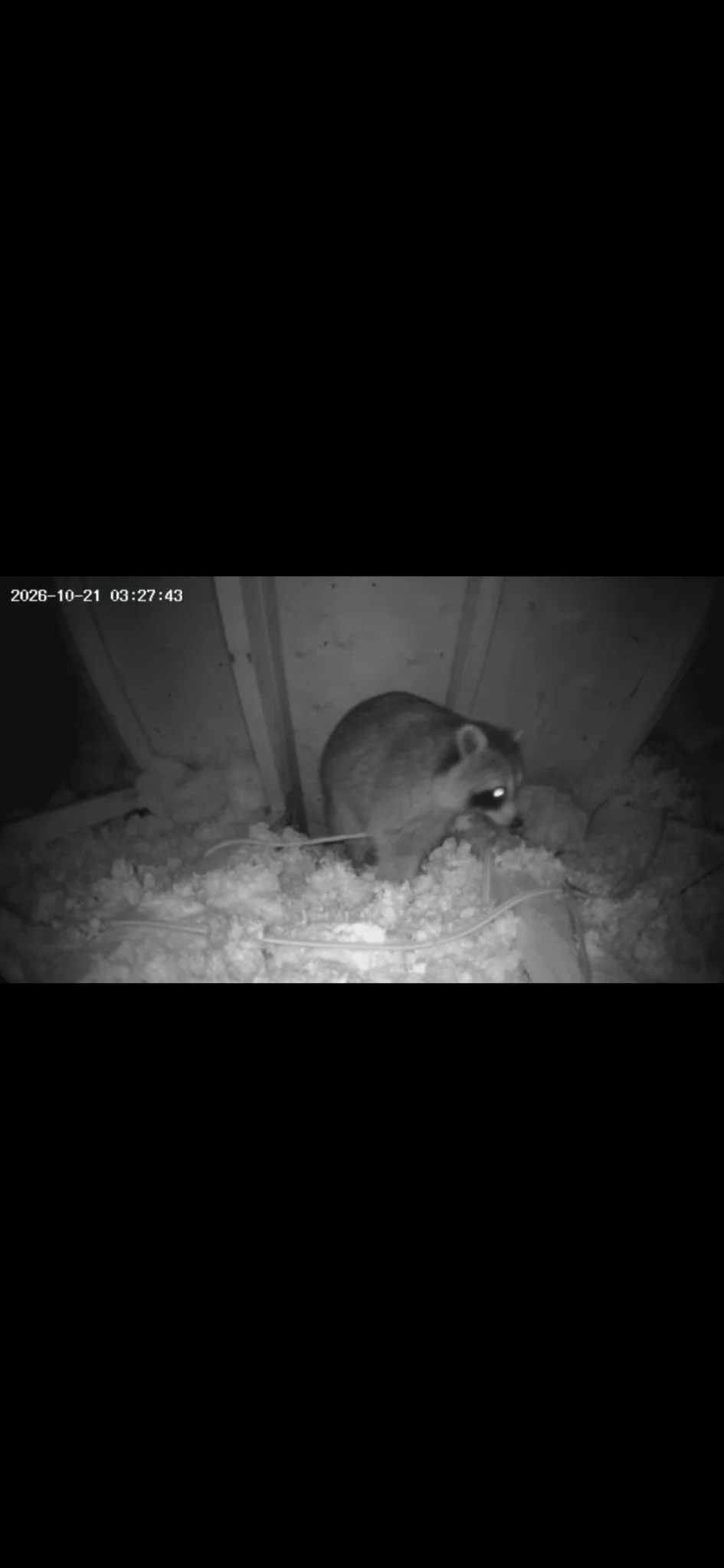
It’s 2 a.m. and something is thumping across your ceiling. Not scurrying — walking, heavy enough to follow from room to room. By morning there’s scratching, maybe chattering, and a smell you can’t place. That’s not a mouse, and it’s not the house settling. In most cases, it’s a raccoon in your attic — and it has no plans to leave on its own.
Regional Wildlife Services provides humane raccoon removal across Burlington and the surrounding region. We find how the raccoon got in, get it out without harming it, and seal every raccoon entry point so another raccoon doesn’t move in next month. Hearing noises tonight? Call 905-320-8984 — we take phone calls and bookings 7 days a week.
Signs You Have a Raccoon in Your Attic
Raccoons are big, strong and nocturnal. A raccoon in attic spaces leaves signs that are hard to mistake once you know them:
- Loud thumping or slow, heavy walking overhead at night — much heavier than squirrels or mice
- Scratching, chattering or chirping, especially in spring — a sign kits (babies) are up there too
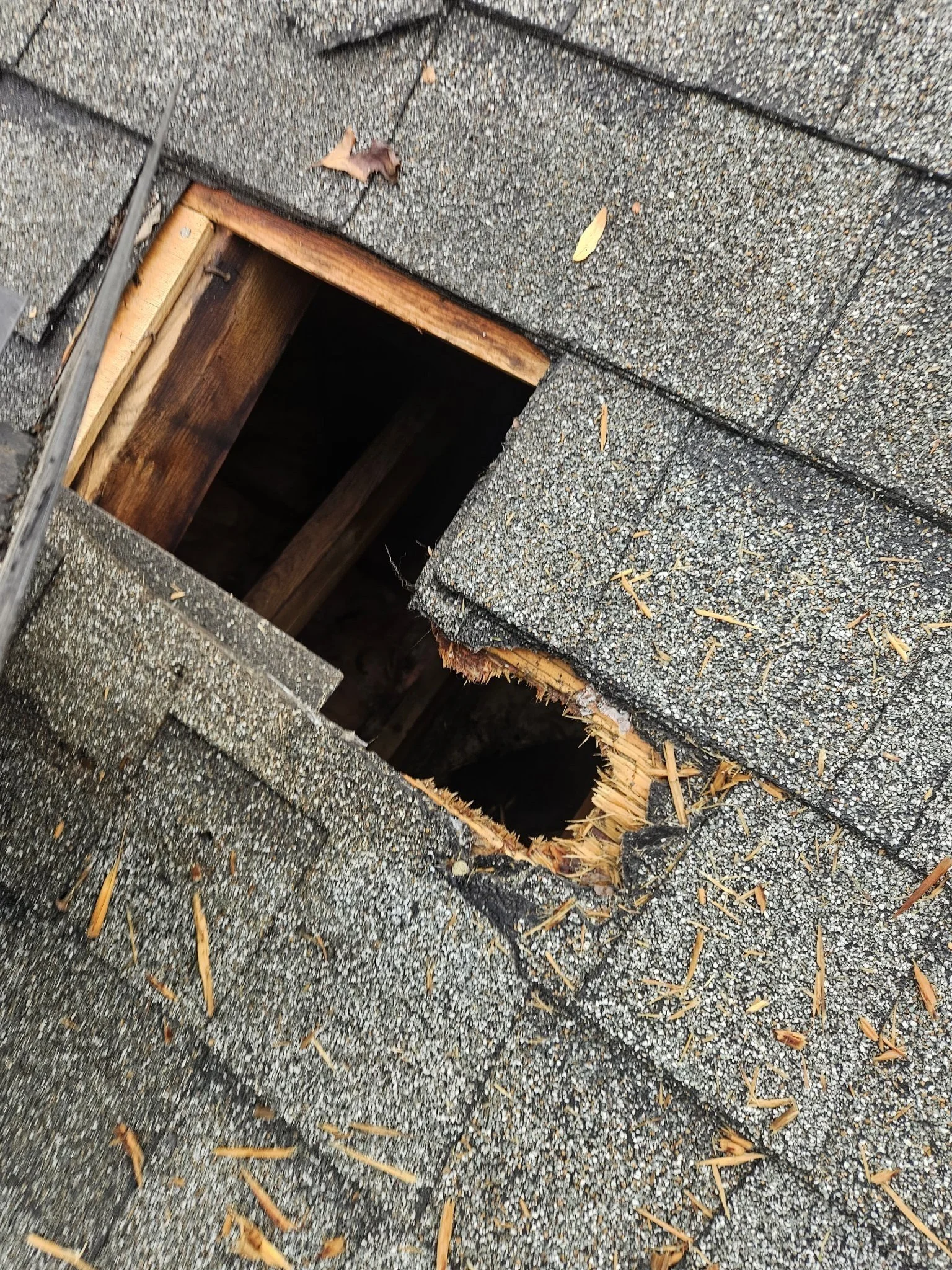
- Damage outside the house: torn or lifted shingles, a bent or pried-open roof vent, soffits pushed in at the roofline
- Strong, musky odours coming through vents or ceiling fixtures
- Droppings and trampled insulation in the attic itself
If you’ve noticed nighttime noises, damaged shingles or strong odours, don’t approach the animal — a cornered raccoon will defend itself. Call us and we’ll confirm what’s up there with a proper inspection.
How Raccoons Get In: Roof Vents, Soffits and Chimneys
A raccoon doesn’t need an open door. It needs one weak point — and a determined raccoon can create one. The entries we find most often:
Roof vents. Standard plastic and aging metal vent covers are no match for raccoon claws and strength. Raccoons pry them up, chew and tear at the edges, and widen the opening until it becomes an entry hole they slip through night after night. Roof vent damage is one of the most common causes of a raccoon in the attic — and the vent it came through is rarely the only weak one on the roof.
Soffits. Where roof planes meet, soffit material can be pushed up or pulled down, opening a gap straight into the attic — older, loosely fitted soffits are especially vulnerable.
Chimneys. An uncapped chimney is an open shaft into the house. Raccoons climb down and den on the smoke shelf, and a female will happily raise kits there.
And once one raccoon has established an entry, others will follow its scent to the same hole. Removing the animal without fixing the entry just resets the clock.
Our Humane Raccoon Removal Process
1. Inspection. We inspect the attic and the roofline to find every raccoon entry point — not just the obvious one — check for kits, and assess damage to insulation, wiring and structure.
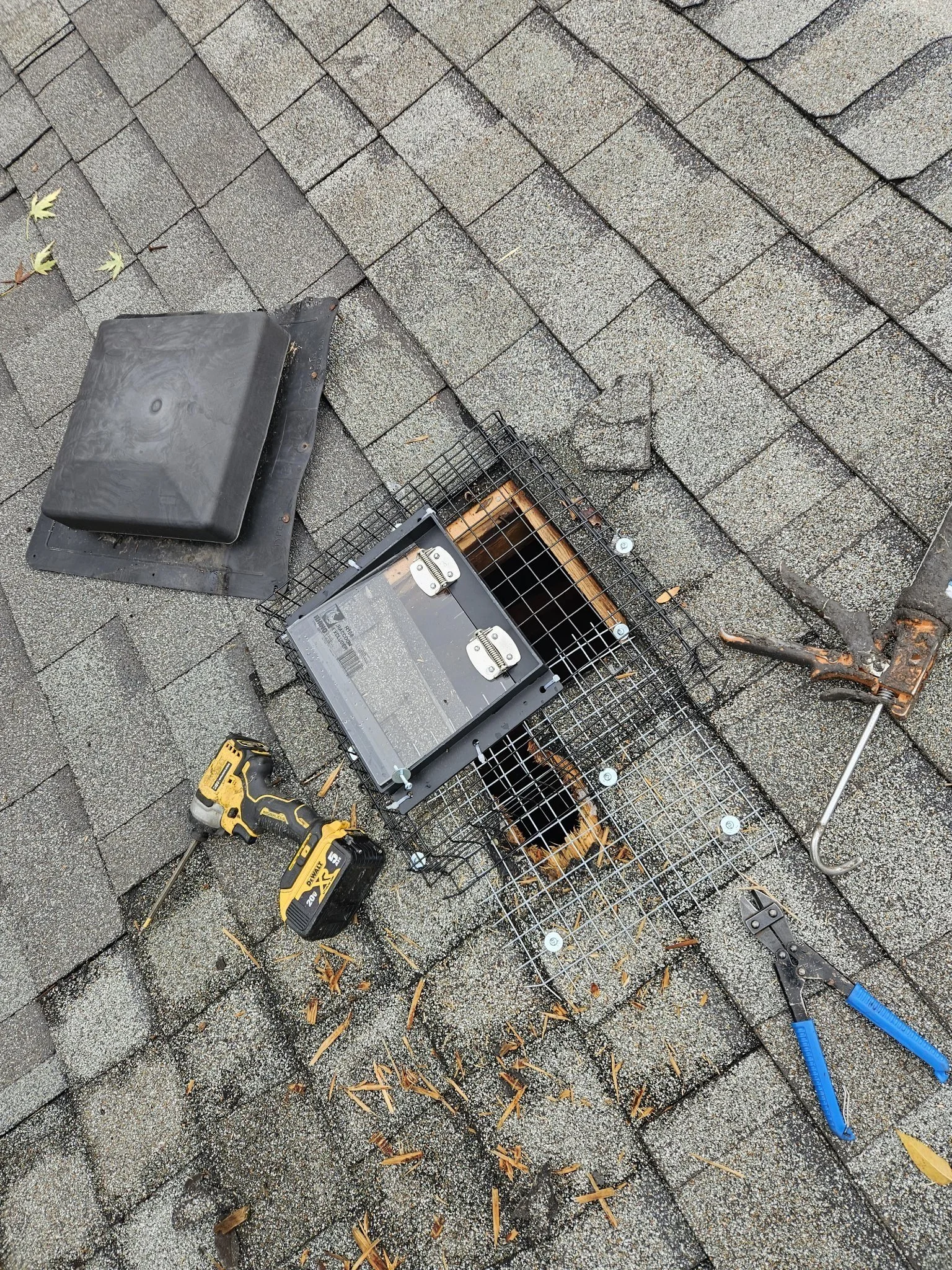
2. One-way door. We install a one-way door at the main entry point. The raccoon leaves on its own to feed, as it does every night — and simply can’t get back in. No trapping stress, no harm to the animal.
3. Exclusion and sealing. While the door is in place, every other entry point is sealed and reinforced. Where roof vents are the weak point, we recommend animal-proof roof vent covers — Regional Wildlife Services installs Vent Defender Pro steel vent covers, which protect the vent without restricting airflow, so the same hole can’t be torn open again next season.
4. Cleanup guidance. Raccoon droppings and urine contaminate insulation and create sanitation concerns. We explain the condition of the affected area and, where cleanup or repair work is recommended, provide a written scope before that work begins — no surprises.
Baby Season: When There Are Kits in the Attic
During baby season, female raccoons actively look for warm, quiet attic spaces to raise their young. This is the situation that goes wrong most often with inexperienced operators: if the mother is removed or locked out alone, the kits are left behind, hidden deep in the insulation.
That never happens on our jobs. Every inspection checks for kits first. When babies are present, the removal is timed and handled so the kits are reunited with their mother outside the home — a mother raccoon is never separated from her young, and she’ll move them to a backup den herself once the attic is closed to her.
The Damage Raccoons Leave Behind
A raccoon living in an attic is not a quiet tenant. The damage we document most often:
- Insulation trampled flat and contaminated with urine and droppings, losing its insulating value
- Wiring chewed and stripped — a genuine safety concern in a closed attic space
- Structural damage to vents, soffits, roof decking and ductwork from repeated tearing and entry
- Sanitation concerns from droppings accumulating in one latrine area over weeks or months
The longer a raccoon stays, the longer the list gets. Early removal is almost always the cheaper outcome.
Why DIY Trapping Usually Fails
A cage trap from the hardware store feels like the obvious answer. In practice, it usually makes things worse:
- It doesn’t close the hole. Catch one raccoon and the entry hole is still there, scented and proven. The next raccoon moves in.
- It can orphan kits. Trap a nursing mother in spring and her babies are left starving in your insulation.
- Ontario rules limit what you can do with a trapped raccoon. Under Ontario rules, a raccoon that is trapped must be released within 1 kilometre of where it was captured — so releasing it “far away” isn’t a legal option, and a raccoon released nearby simply comes back to the entry it already knows.
- Handling is risky. A trapped, frightened raccoon can bite and scratch badly.
Professional raccoon removal works because it solves the whole problem: the animal out, humanely, and every entry sealed behind it.
Frequently Asked Questions
How do I know it’s a raccoon and not squirrels?
Size and timing. Squirrels are light, fast and active at dawn and dusk — you’ll hear quick scurrying. Raccoons are heavy and slow, active through the night, and you’ll hear deliberate thumping and walking. If you’re not sure, an inspection settles it.
How much does raccoon removal cost?
It depends on the job: how many entry points need sealing, whether kits are present, how much exclusion work the roofline needs, and whether cleanup or repairs are recommended. We start with an inspection and a free quote, with a written scope for any recommended prevention or repair work before it begins — you know exactly what you’re paying for.
Is your raccoon removal humane?
Yes. Our standard method is a one-way door that lets the raccoon leave on its own and prevents re-entry — the animal isn’t trapped, poisoned or harmed, and mothers are never separated from their kits.
What if there are baby raccoons in my attic?
We check for kits on every inspection. If they’re present, the removal is planned around them so the mother relocates her young herself, or the kits are reunited with her outside. We never seal an attic with babies inside.
Can raccoons get back in after removal?
Not through the entries we’ve sealed — exclusion is the whole point of the job. We find and seal every raccoon entry point, and where roof vent damage let them in, animal-proof vent covers protect those vents permanently. A removal without exclusion is only a temporary fix.
How quickly can you come out?
We take phone calls and bookings 7 days a week. Service appointments run Monday to Friday, typically — weekend calls book in for the following week.
Do you clean up the attic afterwards?
We assess the contamination and damage during the inspection and explain exactly what cleanup or repair work the space needs. Recommended work is scoped in writing before it begins.
Raccoon Removal Across Burlington, Oakville, Milton, Hamilton, Stoney Creek, Georgetown & Niagara
Regional Wildlife Services is based in Burlington and serves homeowners across the region. Whether it’s raccoon removal in Burlington, a raccoon in an attic in Oakville, raccoon removal in Milton or Hamilton, a den found in Stoney Creek, or raccoons tearing at a roof in Georgetown or the Niagara region — the process is the same: inspect, remove humanely, seal every entry, and stand behind the exclusion work. Owner Sean Thornton has 20+ years in this work, and the photos on our Gallery page are from real jobs in these communities, not stock libraries.
Hearing Something Up There Tonight?
Call 905-320-8984. We take phone calls and bookings 7 days a week; service appointments run Monday to Friday, typically — weekend calls book in for the following week. You’ll get a free quote, a humane removal, and an attic that’s sealed against the next raccoon.

GET MY RACCOON REMOVAL QUOTE!
Dealing with raccoons? Contact us today for a free quote on fast, humane raccoon removal. Our team is ready to help you take back your space—quickly and professionally.