

Squirrel Removal in
Squirrel Removal in Burlington & Oakville
Let Regional Wildlife Services be the solution to your Squirrel problem.
Squirrel Removal — Squirrels in Your Attic, Removed Humanely
It starts at sunrise: scratching overhead, a quick scamper across the ceiling, then chewing — always chewing. Squirrels in the attic are daytime tenants, most active at dawn and dusk, and once one moves in, it treats your attic like a hollow tree — nesting, storing food, and raising young in your insulation.
Regional Wildlife Services provides humane squirrel removal across Burlington and the surrounding region. We find the squirrel entry hole, get the squirrels out without harming them, and seal every entry point. Hearing scratching today? Call 905-320-8984 — we take phone calls and bookings 7 days a week.
Signs You Have a Squirrel in Your Attic
A squirrel in attic or wall spaces leaves a pattern that’s easy to recognize:
- Scratching, scurrying and rolling sounds at dawn and dusk — the rolling is often nuts being moved around the attic
- Chewing and gnawing sounds — a squirrel’s teeth never stop growing, so it chews constantly to wear them down
- Squirrels on your roofline — dropping from an overhanging branch and disappearing at the same spot every day
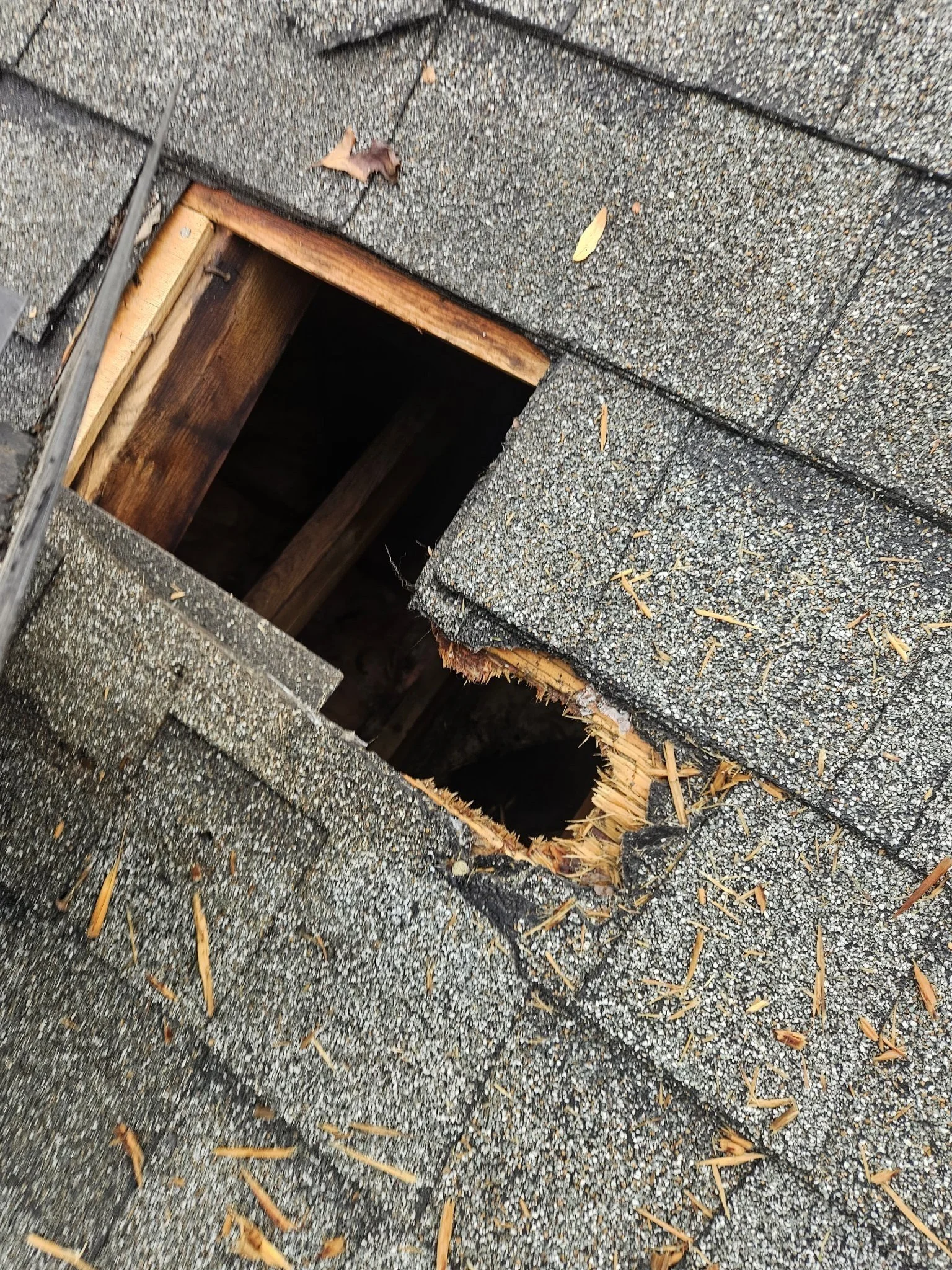
- A chewed roof vent, a lifted soffit edge, or a small round hole chewed into fascia or soffit material — with droppings and nesting material (leaves, twigs, shredded insulation) in the attic below it
Hearing scratching most mornings? An inspection confirms what’s up there. Don’t seal an opening yourself in the meantime — a squirrel sealed inside will chew a new way out.
How Squirrels Get In: Roof Vents, Soffits and Roofline Gaps
Squirrels don’t need an open door — they barely need a hole at all. An adult grey squirrel can squeeze through a gap roughly the size of a golf ball, about two inches across, and anything close to that size, a squirrel will chew until it fits. Most intrusions start along the roofline, where overhanging branches give squirrels easy access. The entries we find most often:
Roof vents. Squirrels chew through standard plastic roof vents, and older vents weakened by sun and weather. A chewed roof vent is one of the most common squirrel entries we find — and it’s rarely the only weak vent on the roof.
Soffits and fascia. Soft, rotting or loosely fitted soffit panels and fascia boards get chewed open, especially at corners and roofline joints — and once a small opening is found, squirrels widen it.
Gable vents, chimneys and plumbing stacks. Gaps around gable vents, chimney flashing and plumbing vent stacks are all wide enough for a squirrel.
And once one squirrel has established a squirrel entry hole, its scent marks the route — others follow it, season after season, until the hole is sealed.
Our Humane Squirrel Removal Process
1. Inspection. We inspect the attic and the roofline to find every squirrel entry point, check for young, and assess damage to wiring, insulation and structure.
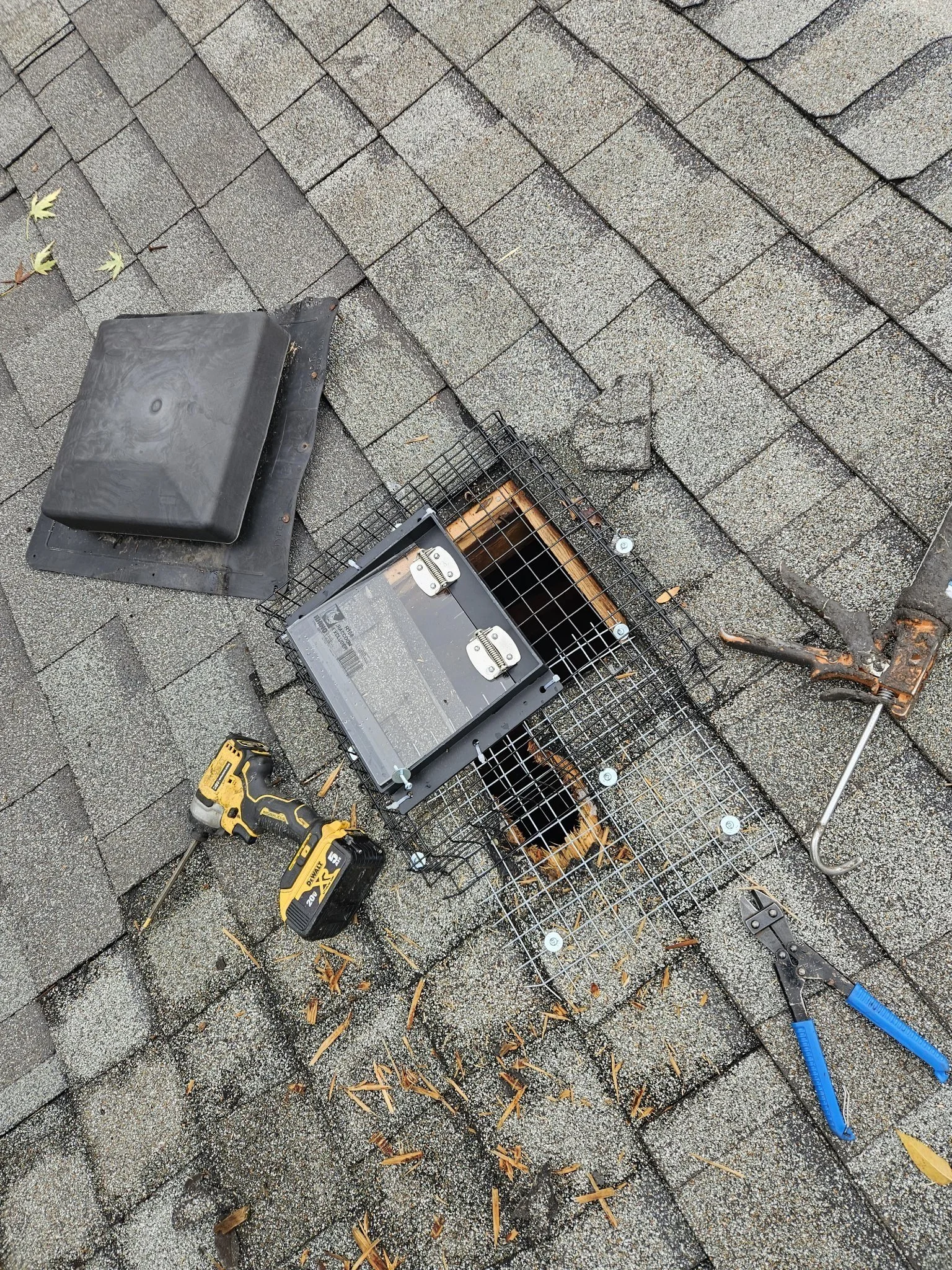
2. One-way door. We install a one-way door at the main squirrel entry hole. The squirrel leaves on its own to feed, as it does every day — and simply can’t get back in. No trapping stress, no harm to the animal.
3. Exclusion and sealing. While the door is in place, every other entry point is sealed and reinforced. Where a chewed roof vent is the weak point, we recommend animal-proof roof vent covers — Regional Wildlife Services installs Vent Defender Pro steel vent covers, which a squirrel can’t chew through, and which protect the vent without restricting airflow, so the same hole can’t be chewed open again.
4. Cleanup guidance. We explain the condition of areas affected by droppings, urine and nesting material and, where cleanup or repair work is recommended, provide a written scope before that work begins — no surprises.
Baby Season: Two Litters a Year
In Ontario, squirrels raise two litters a year — one in spring and a second in late summer. A female denning in your insulation is very likely raising babies in it.
This is where removals go wrong most often: if the mother is removed or locked out alone, the young are left behind. That never happens on our jobs. Every inspection checks for young first. When babies are present, the removal is planned so the young are reunited with their mother outside — a mother squirrel is never separated from her litter, and she’ll move them to a backup den herself.
The Damage Squirrels Leave Behind
A squirrel in attic spaces is not a quiet tenant, and its teeth make it a destructive one. The damage we document most often:
- Chewed wiring — squirrels gnaw electrical wiring, and exposed wiring in a closed attic is a genuine fire risk
- Insulation torn up, tunnelled through and contaminated with urine, droppings and nesting material
- Chewed entries — roof vents, soffits, fascia and woodwork chewed wider, and chewed plumbing vent stacks and flashing at the roofline — openings that then let weather in
Early removal is almost always the cheaper outcome.
Why DIY Removal Usually Fails
Repellents, ultrasonic gadgets and a tube of caulk feel like the obvious answer. In practice, they usually make things worse:
- They don’t close the hole. A squirrel turned away by a repellent smell knows the entry, and a thin patch over a squirrel entry hole gets chewed through in a night.
- They can orphan young. Seal an entry or trap a nursing mother in spring or late summer and her litter is left behind.
- Ontario rules limit what you can do with a trapped squirrel. Under Ontario rules, a squirrel that is trapped must be released within 1 kilometre of where it was captured — so releasing it “far away” isn’t a legal option, and a squirrel released nearby simply comes back to the entry it already knows.
- One squirrel is rarely the whole story — several often share an attic and its entries, and removing one without exclusion leaves the rest, and the holes.
Professional squirrel removal works because it solves the whole problem: the animals out, humanely, and every entry sealed behind them.
Frequently Asked Questions
How do I know it’s squirrels and not raccoons or mice?
Timing and weight. Squirrels are light and fast — quick scurrying and scratching, mostly at dawn and dusk. Raccoons are heavy, slow and active through the night. Mice are lighter still, with faint scratching inside walls. If you’re not sure, an inspection settles it.
How much does squirrel removal cost?
It depends on the job: how many entry points need sealing, how much exclusion work the roofline needs, whether young are present, and whether cleanup or repairs are recommended. We start with an inspection and a free quote, with a written scope for any recommended prevention or repair work before it begins — you know exactly what you’re paying for.
Is your squirrel removal humane?
Yes. Our standard method is a one-way door that lets the squirrel leave on its own and prevents re-entry — the animal isn’t trapped, poisoned or harmed, and mothers are never separated from their young.
What if there are baby squirrels in my attic?
We check for young on every inspection. If they’re present, the removal is planned around them so the mother relocates her litter herself, or the young are reunited with her outside. We never seal an attic with babies inside.
Can a squirrel really chew through a roof vent?
Yes — it’s one of the most common entries we find. Plastic vents weaken with age and sun exposure, and a squirrel’s teeth are built for chewing. That’s why we recommend a steel animal-proof vent cover wherever a chewed roof vent let them in.
Can squirrels get back in after removal?
Not through the entries we’ve sealed — exclusion is the whole point of the job. We find and seal every squirrel entry hole, and where a vent was chewed open, a steel vent cover protects it permanently.
How quickly can you come out?
We take phone calls and bookings 7 days a week. Service appointments run Monday to Friday, typically — weekend calls book in for the following week.
Squirrel Removal Across Burlington, Oakville, Milton, Hamilton, Stoney Creek, Georgetown & Niagara
Regional Wildlife Services is based in Burlington. Whether it’s squirrel removal in Burlington, squirrels in the attic in Oakville, squirrel removal in Milton or Hamilton, a chewed entry found in Stoney Creek, or squirrels chewing into a roof in Georgetown or the Niagara region — the process is the same: inspect, remove humanely, seal every entry. Owner Sean Thornton has 20+ years in this work, and the photos on our Gallery page are from real jobs, not stock libraries.
Hearing Scratching Up There?
Call 905-320-8984. We take phone calls and bookings 7 days a week; service appointments run Monday to Friday, typically — weekend calls book in for the following week. You’ll get a free quote, a humane removal, and an attic that’s sealed against the next squirrel.

GET MY squirrel REMOVAL QUOTE!
Hearing scratching in the attic? Contact us today for a free quote on safe and humane squirrel removal. We’ll get them out and keep them out—fast and effectively.